

Red Sea reopening enters wait-and-see phase as carriers weigh risks
A fragile ceasefire and mixed signals from the region have put the Red Sea reopening into a wait-and-see phase. BBC Chartering is taking a measured approach, stressing that safety must be assured before any return, while Drewry warns that a gradual restoration of traffic through Suez could squeeze breakbulk carriers as competition intensifies with container lines.
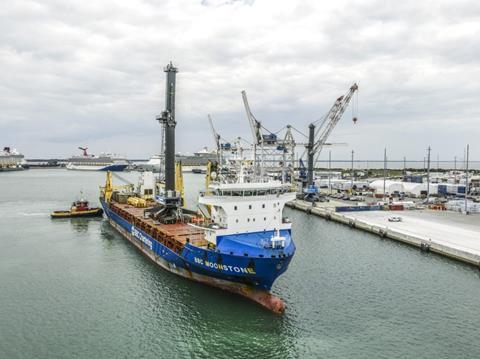
Ulrich Ulrichs, ceo at multipurpose shipping line BBC Chartering, said it is closely monitoring the situation, although safety remains the number one concern. “While conditions have improved, the peace process in Gaza and Israel is still fragile, and risks remain high, as highlighted by the recent attack on a Spliethoff vessel,” he warned.
The industry has adapted to the current circumstances and BBC is not experiencing pressure from customers to resume Red Sea transits. He said, “most customers requiring faster transits (and with that lower rates) are booking with carriers that continue to operate via the Red Sea. Those carriers are primarily Chinese operators.”
In terms of a timeline for a return to the Red Sea, Ulrichs took a cautious stance. “If safety can be reliably assured, a return could happen on relatively short notice,” he pointed out. “However, some customers and vessel owners may require additional time to evaluate routing via the Red Sea again. At this stage, we cannot forecast when this process will begin, but we anticipate it will take at least several more months.”
He added that BBC Chartering would consider resuming Red Sea transits once major Western container and ro-ro carriers return to the route. “If leading container carriers such as Maersk and Hapag-Lloyd deem it safe, we are likely to follow,” he explained.
According to shipping analyst Drewry, the Red Sea ceasefire is proving to be a wait-and-watch moment for breakbulk shipping. It believes that with a rising number of container vessels returning through the Suez, breakbulk carriers will face increased competition.
That expectation would likely exert slight downward pressure on general cargo day rates, while tonne-mile demand for project carriers could contract on this route, affecting rates.
Nevertheless, any large-scale return of marine traffic to the Red Sea and Suez will likely result in port congestion, delays and a protracted return to normal trading patterns.
Container lines are likely to take up some of the general cargo commodities into boxes, squeezing breakbulk volumes as shippers may opt for cheaper containerised options. When it comes to project cargo, Drewry said container lines are competing for this business, particularly when they have excess slot capacity available.
“Project carriers were the most impacted by the Red Sea crisis due to their high-value, time-sensitive cargoes and the need for extensive rerouting,” said Drewry. “If the route fully reopens, particularly with strong breakbulk demand in sectors like infrastructure and energy, the capacity freed by shorter Suez transits is likely to be absorbed by the growing demand for these goods. Initially, this could put downward pressure on charter rates due to lower vessel utilisation; however, sustained demand for heavy lift cargo is expected to keep rates at profitable levels for vessel operators.”
Source: Heavy Lift