

ABB’s New DP2 System Redefines Wind Installation Vessel Control After High Stakes DEME Sea Trials
A New Benchmark Emerges at Sea
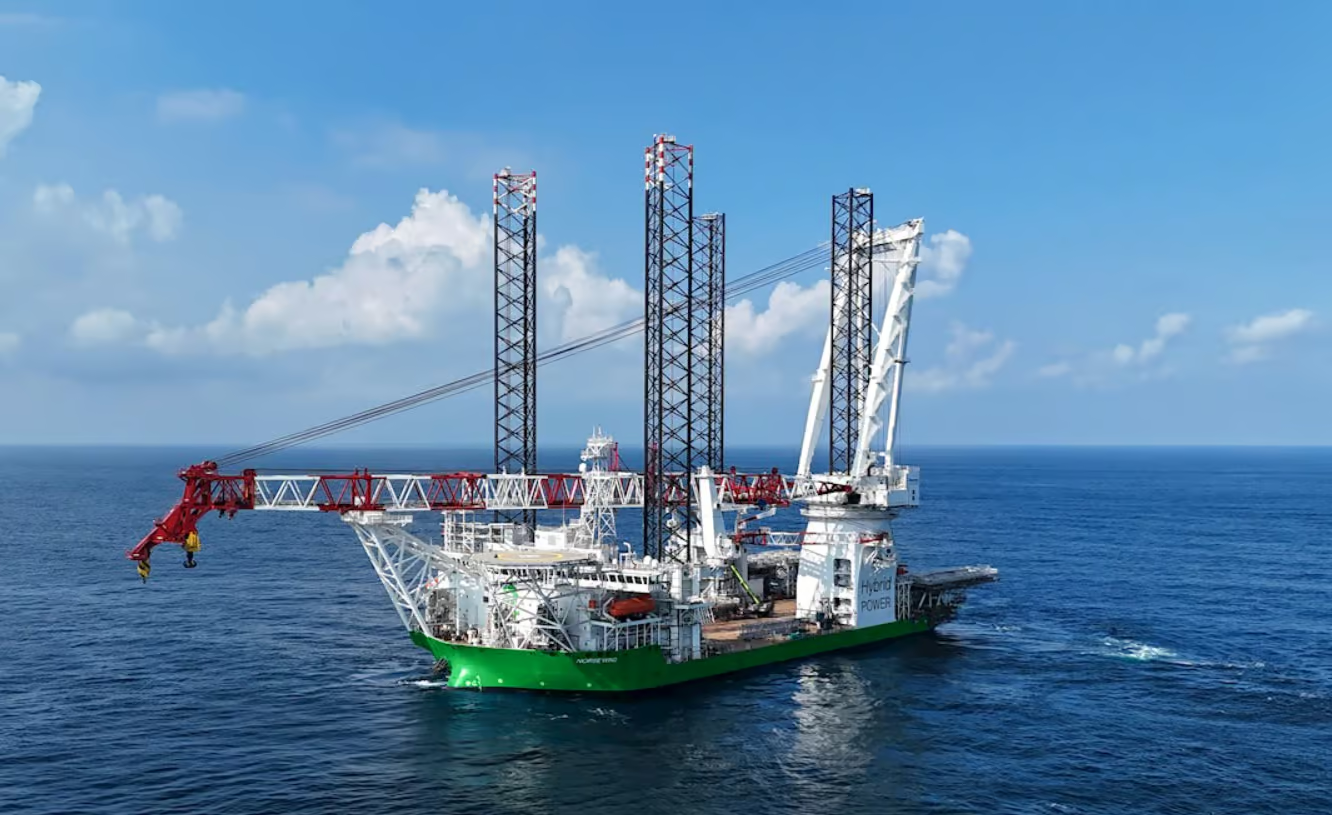
In a year defined by rapid offshore wind expansion and rising expectations for vessel precision, the new Dynamic Positioning Class 2 system from ABB has cleared a major hurdle. Following a full Failure Mode and Effects Analysis proving trial and sea trials on board the DEME newbuild wind turbine installation vessel Norse Wind, the upgraded DP2 functionality is already being viewed by many operators as a shift in how modern offshore vessels will be controlled.
The trials showcased a level of vessel response and operator clarity that many in the sector have been asking for. Anyone who has sat in a DP chair during a weather window knows the mental arithmetic involved. When conditions change suddenly, decision making often comes down to instinct supported by fragmented system data. ABB’s unified approach aims to remove that fragmentation entirely.
System Level Synergy Put to the Test
At the heart of the development is ABB Ability Marine Pilot Control, which merges maneuvering, transit, and DP into a single interface. When combined with Azipod propulsion units, the system behaves less like separate modules and more like a cohesive operating environment. The sea trials verified continuous control performance even under closed bus-tie operations through ABB’s PEMS power and energy management system.
Operators on board Norse Wind also worked with ABB’s tactile AX Bridge levers and a redesigned interface that prioritizes situational awareness. Instead of relying on static thruster models, the solution adjusts dynamically in real time to reflect changes in hydrodynamics as the vessel gains or loses speed. Anyone who has watched a WTIV respond sluggishly when transitioning between modes can appreciate what that means for both safety and operational tempo.
DEME Pushes for a Higher Standard
DEME’s Head of Fleet Jeroen Vanden Branden described the need to push past long accepted industry standards. He noted that ABB’s system gives crews a clear, intuitive workspace where essential information is delivered without clutter. For operators accustomed to older generation displays, the immediate benefit is the ability to make decisions without navigating through multiple screens at critical moments.
The industry will not have to wait long to see the wider rollout. DEME’s sister ship Norse Energi will enter service in early 2026 equipped with the same DP2 system, suggesting the company sees this approach as a future fleet baseline rather than a one vessel experiment.
A Collaboration Built Around Real World Demands
ABB Marine and Ports Business Line Manager Rune Braastad credited the achievement to a long technical development cycle paired with DEME’s willingness to trial a next step solution. From the early model based control algorithms to the final hours of sea testing, the project appears to have been driven by a shared goal of practical safety gains rather than incremental refinement.
In an offshore market where operational windows are tight and turbine components continue to grow heavier, the ability to unify vessel control into a single ecosystem may prove more than a convenience. It may soon become an expectation.
Source: Breakbulk News