

ONE Takes Strategic Foothold in China’s Northeast as 6.6 Million TEU Dalian Terminal Deal Signals Network Tension
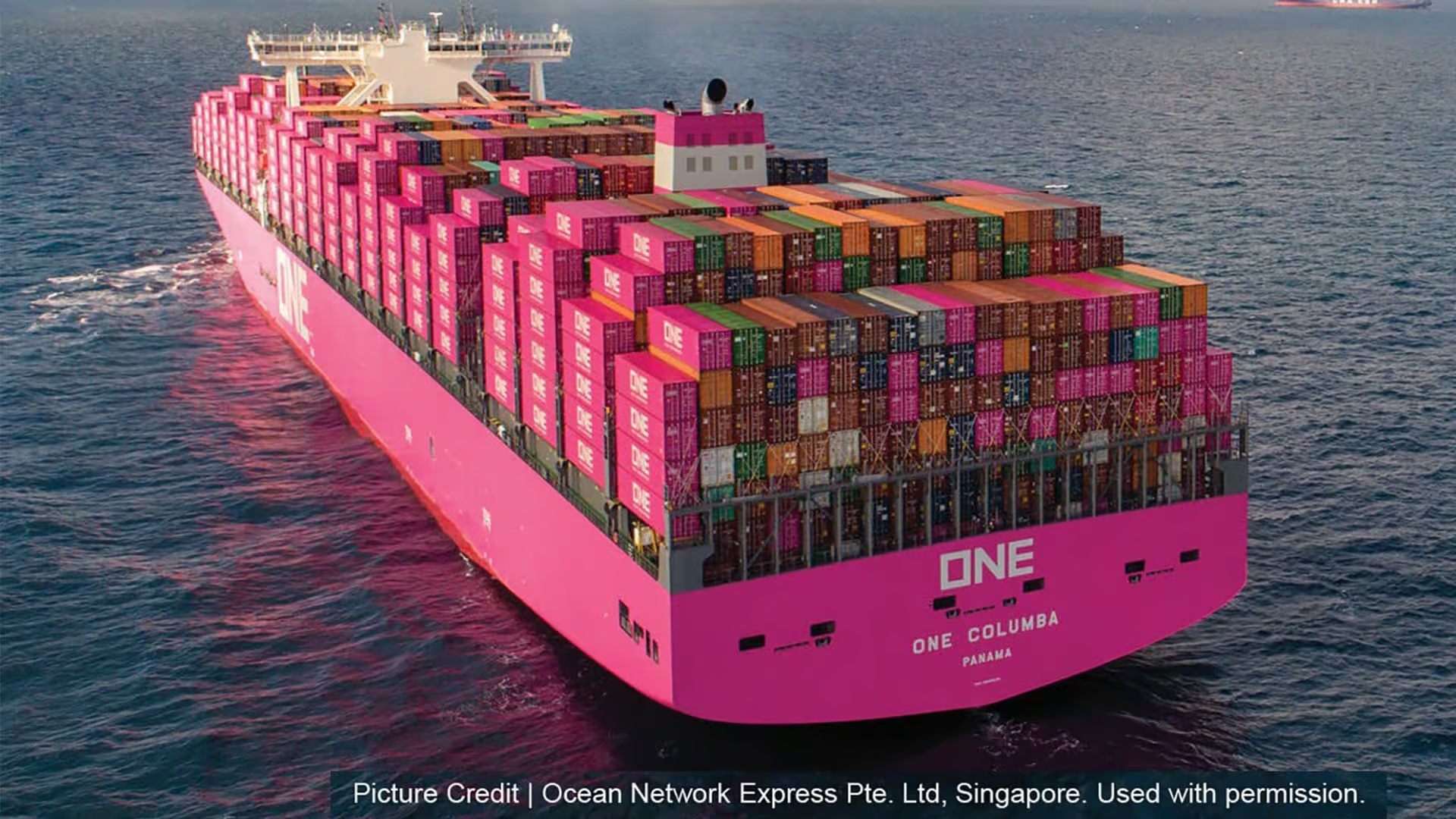
Ocean Network Express has secured a minority equity stake in Dalian Container Terminal, marking a calculated move to lock in long term access at one of Northeast China’s most critical container gateways.
The agreement, signed on 23 December 2025, places the Singapore headquartered carrier inside the ownership structure of a terminal that already handles 6.6 million TEU annually. For an industry where berth access and operational certainty increasingly shape competitive advantage, the timing of the investment is difficult to ignore.
A terminal built for scale and resilience
Dalian Container Terminal sits at the heart of the Port of Dalian, the largest foreign trade container hub in Northeast China. The terminal operates 14 container berths across a total quay length of 4,390 meters, supported by deep drafts designed to accommodate the latest generation of large container vessels.
Modern ship to shore cranes, high density yard equipment, and integrated terminal systems position DCT as a workhorse facility rather than a prestige asset. For shipping lines, this kind of infrastructure often matters more than headline expansion projects. It answers a simple operational question. Can the terminal handle volume reliably when schedules tighten and vessels arrive bigger than planned?
Why minority stakes are back in focus
For global carriers, outright terminal ownership is no longer the default strategy it once was. Minority stakes, however, are gaining renewed relevance. They offer influence without the capital burden or regulatory exposure of full control.
Hiroki Tsujii, Global Chief Officer of Product and Network at Ocean Network Express, framed the investment squarely in those terms. He said the stake aligns with ONE’s strategy of ensuring access at key regional ports, while enabling collaboration with DCT on infrastructure upgrades and green terminal initiatives.
In practical terms, this creates a seat at the table when decisions are made on berth allocation, equipment investment, and sustainability priorities. In an era of port congestion risk, weather disruption, and tightening environmental rules, those conversations matter.
Northeast China’s gateway role under scrutiny
Dalian’s role as an international trade gateway has taken on added weight as supply chains rebalance across Asia. Cargo owners and forwarders increasingly ask whether secondary hubs can absorb volatility without losing efficiency. DCT’s scale suggests it can.
With 6.6 million TEU capacity already in place, the terminal is not chasing speculative growth. Instead, it is positioned to optimize throughput, reduce dwell times, and support greener operations. ONE’s involvement signals confidence that these priorities align with its network design.
For carriers, the analogy is simple. Owning a key to the door matters less than knowing the door will open when needed. Minority stakes provide that assurance without locking capital into fixed assets.
Green terminals and operational leverage
ONE’s statement also pointed directly to green terminal initiatives. While details were not disclosed, the implication is clear. Terminal operators increasingly expect shipping lines to participate in decarbonization strategies rather than merely comply with them.
Electrification of equipment, shore power readiness, and data driven efficiency are no longer optional upgrades. They influence port selection decisions, particularly for services calling at multiple Asian hubs.
By aligning with DCT at ownership level, ONE gains leverage to shape how sustainability targets are implemented on the ground, rather than reacting to them later through higher port costs or operational constraints.
For industry observers, the deal raises a broader question. As networks become more fragile and regulations more complex, will minority terminal stakes become the quiet differentiator between carriers that manage volatility and those that chase it?
Source: Breakbulk News