

CMA CGM Sends Two Boxships Through Suez as Carriers Test Red Sea Return After Gaza Ceasefire
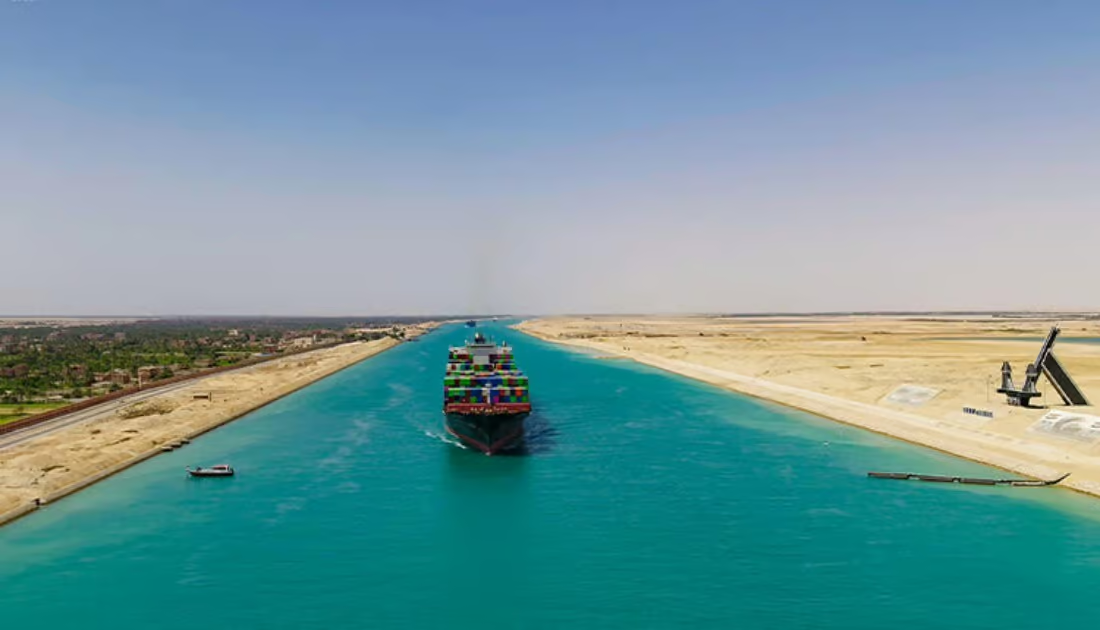
Two container vessels operated by CMA CGM transited the Suez Canal this week, marking one of the clearest signs yet that liner operators are cautiously reassessing Red Sea routes after months of security-driven diversions.
Market and operational impact
Egypt’s Suez Canal Authority confirmed that the CMA CGM Jacques Saade and CMA CGM Adonis completed northbound and southbound transits on Tuesday, restoring a direct Asia Europe and Asia Mediterranean passage that many carriers have avoided since late 2023.
Since November last year, most container lines rerouted vessels around the Cape of Good Hope after attacks by Yemen’s Iran-aligned Houthi militants on commercial shipping in the Red Sea. The detour added roughly 3,500 to 4,000 nautical miles to Asia Europe voyages, extending transit times by up to two weeks and driving higher fuel consumption, emissions, and freight costs.
The Suez Canal is the fastest maritime link between Asia and Europe and a critical artery for global container, breakbulk, and project cargo flows. Prolonged diversions sharply reduced canal traffic and foreign currency revenues for Egypt, while contributing to vessel bunching, schedule unreliability, and capacity imbalances across liner networks.
According to the canal authority, CMA CGM Jacques Saade crossed from the north while sailing from Morocco to Malaysia, while CMA CGM Adonis transited from the south.
Company fleet data shows the Jacques Saade operates on an Asia North Europe loop, while Adonis serves Asia Mediterranean trades, both routes heavily disrupted over the past year.
Stakeholder reactions and next steps
CMA CGM did not comment on the specific transits, but the French carrier has previously said Red Sea and Suez passages are assessed on a case-by-case basis, depending on security conditions and naval risk assessments.
Industry caution remains high. Although a fragile ceasefire in Gaza took effect on October 10, prompting a pause in reported Houthi attacks on commercial vessels, insurers and ship operators continue to price in elevated risk premiums for Red Sea transits.
A schedule published on CMA CGM’s website also indicates the carrier plans to route its India United States INDAMEX service via Suez starting in January, suggesting a limited but deliberate reintroduction of the canal into selected service strings.
Other major liners are taking similar incremental steps. Last week, Maersk confirmed that one of its vessels had sailed through the Red Sea and Bab el Mandeb Strait for the first time in nearly two years. The Danish carrier said it had no plans for a full reopening of the route and would instead pursue a “stepwise approach” toward resuming navigation.
Wider context and industry outlook
For container, breakbulk, and project cargo operators, even partial normalization of Suez transits could ease pressure on global schedules and equipment availability. Shorter routings reduce fuel burn and emissions exposure, an increasing concern as carriers face tightening environmental regulations and customer scrutiny.
However, analysts note that a sustained return to pre crisis traffic levels will likely depend on longer term security guarantees in the Red Sea and clarity on geopolitical risks linked to the Gaza conflict. Many operators are expected to maintain parallel routing strategies, keeping Cape diversions as contingency options while selectively reintroducing Suez transits where commercially and operationally viable.
For now, the passage of two CMA CGM vessels signals a cautious reopening rather than a full reset, but it underscores how quickly global shipping lanes can begin to shift once perceived risk starts to ease.
Source: Reuters, Breakbulk News