

Venezuela’s Oil Trade Hits a Wall as Asia Flows Freeze and Chevron Becomes Sole Exit to the U.S.
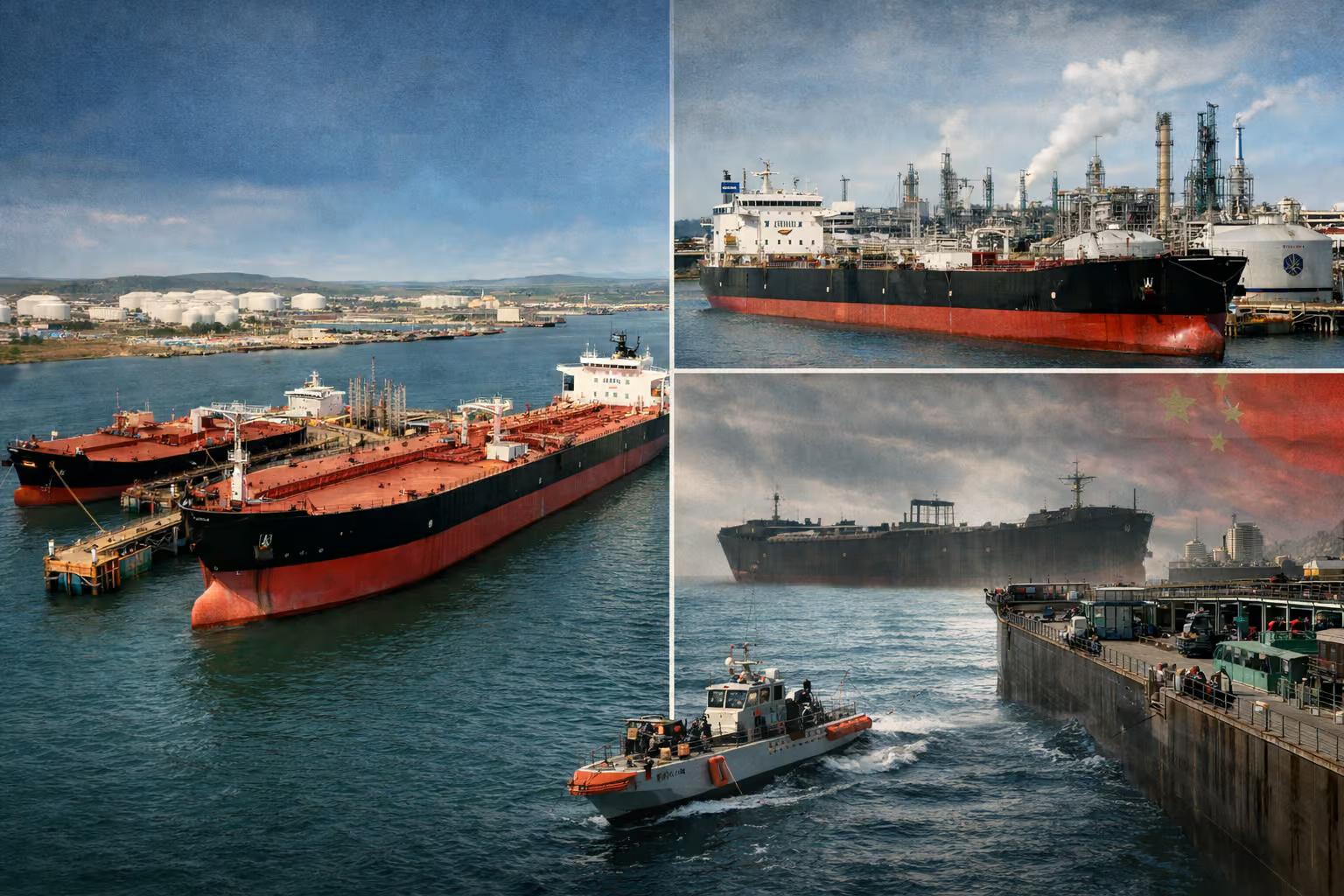
Venezuela’s crude exports to Asia have effectively stopped this week, while Chevron has emerged as the only operator moving Venezuelan oil reliably to the United States under a narrow U.S. authorization, underscoring a sharp split in global tanker trade routes.
Shipping data and port records show that Venezuela’s main export hubs, including Jose Terminal, have recorded no PDVSA crude loadings for Asian customers for five consecutive days. Asia, led by China, has absorbed the bulk of Venezuelan barrels in recent years, making the halt a material disruption for traders, shipowners, and port operators.
Market and operational impact
The standstill follows stepped-up U.S. naval enforcement announced in mid December targeting tankers carrying sanctioned Venezuelan oil. The measures, described by U.S. officials as a quarantine on sanctioned vessels, have raised insurance, financing, and operational risks for ships lifting PDVSA cargoes bound for Asia.
For PDVSA, the impact is immediate. With Asia-bound liftings stalled and storage capacity limited, analysts warn that sustained disruption could force further production curtailments at already strained fields and terminals. Venezuela’s export system has little flexibility to absorb prolonged delays, particularly for heavy and extra-heavy crude grades that require blending and specialized handling.
For the tanker market, the disruption has widened the divide between mainstream owners and the so-called grey or shadow fleet. Mainstream operators have largely exited the trade, while sanctioned tonnage continues to operate outside standard insurance and compliance frameworks.
Chevron’s role and U.S. flows
Against this backdrop, Chevron has resumed shipments of Venezuelan crude to refineries on the U.S. Gulf Coast under a specific U.S. Treasury license. The authorization allows limited exports provided proceeds do not flow to the Venezuelan government.
Shipping data shows Chevron-chartered tankers loading and discharging without the delays facing PDVSA cargoes destined for Asia. The company has also begun recalling expatriate staff to Venezuela as commercial flights restart, signaling expectations of continued operations despite tighter U.S. enforcement elsewhere.
Market participants say Chevron’s barrels now represent a critical outlet for PDVSA and a key source of heavy sour crude for Gulf Coast refiners configured for such grades. Any change to the license, they add, would quickly tighten regional crude balances and affect refinery margins.
Dark fleet movements and enforcement questions
While official Asian exports have stalled, tracking firms report that at least a dozen sanctioned tankers loaded Venezuelan crude in late December and early January and departed toward China. The cargoes are estimated at roughly 12 million barrels.
Many of the vessels sailed with AIS transponders switched off or manipulated, a tactic commonly used in sanctioned trades. Separate reports indicate more than 16 Venezuela-linked vessels leaving port areas in recent days, potentially using ship-to-ship transfers and convoy sailing to reduce interception risk.
The U.S. enforcement campaign, known as Operation Southern Spear, has already seen several tanker boardings in the Caribbean. Washington has not publicly said whether the recent dark fleet departures were tolerated, monitored, or remain subject to interdiction.
For ports, insurers, and charterers, the uncertainty is now the main risk. If Asia remains closed while only Chevron’s flows continue, Venezuela’s oil system faces mounting pressure, and global tanker markets may see further fragmentation between compliant trades and sanctioned routes in the weeks ahead.
Source: Breakbulk News