

China’s First Methanol Bunkering Move Tests Whether Green Fuels Are Finally Ready for Scale
The arrival of Wah Kwong Maritime Transport Holdings Limited’s latest managed vessel signals a turning point for alternative marine fuels in China. With the commissioning of the Da Qing 268, the country’s first dual fuel methanol powered bunkering vessel, the conversation around green fuel readiness is shifting from theory to execution.
A new chapter for bunkering in South China
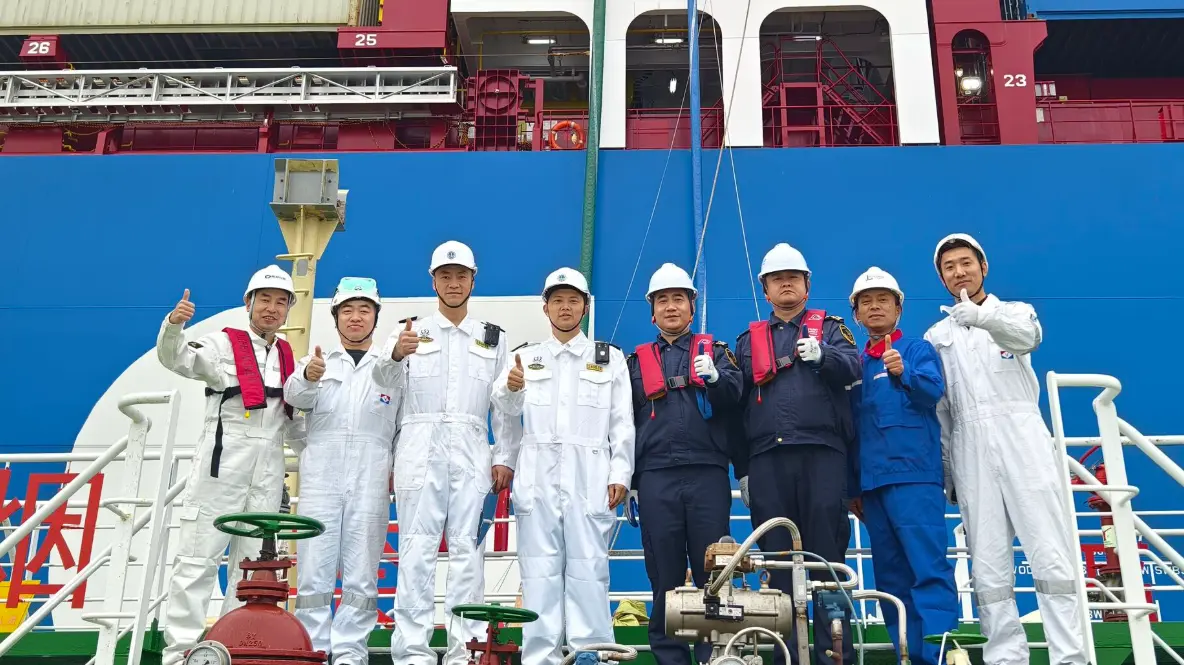
At 109.9 metres long and 7,500 DWT, the Da Qing 268 brings 10,362 cubic metres of cargo tank capacity into active service. On 21 January, she completed her first ship to ship bunkering operation at Yantian Port in Shenzhen, delivering 200 tonnes of green methanol to the container vessel COSCO SHIPPING Carnation.

For operators, the milestone is less about ceremony and more about reliability. Can methanol be delivered safely, efficiently, and without disrupting port operations? This first operation suggests it can, provided planning and coordination are tight.
Managed experience meets new fuel reality
The vessel joins a growing bunkering portfolio under Wah Kwong’s management, including the LNG bunkering vessel Hai Gang Wei Lai, once the world’s largest of its kind, and Hai Gang Zhi Yuan, China’s first methanol bunkering vessel. The addition of a river sea LNG unit further underscores a strategy built on operational diversity rather than a single fuel bet.
According to those involved, the operation required seamless coordination, from route planning to execution alongside terminal and fuel partners. In practice, it resembled a complex offshore project more than a routine port call.
Fuel supply and port ambition align
The green methanol was supplied by CIMC Enric Holdings Limited from its Zhanjiang facility in Guangdong, which began operations in December 2025. That timing matters. Fuel availability has often been the missing link in alternative fuel discussions.
For Yantian Port (Shenzhen), the operation fits a broader ambition to build an integrated fuel port vessel ecosystem within the Greater Bay Area. The question now facing the industry is simple. Was this a symbolic first step, or the start of a repeatable model that other ports and operators can copy?
Source: Breakbulk News