

Scottish Government Backs Stornoway Port with GBP 1.8 Million for Floating Wind Hub Expansion
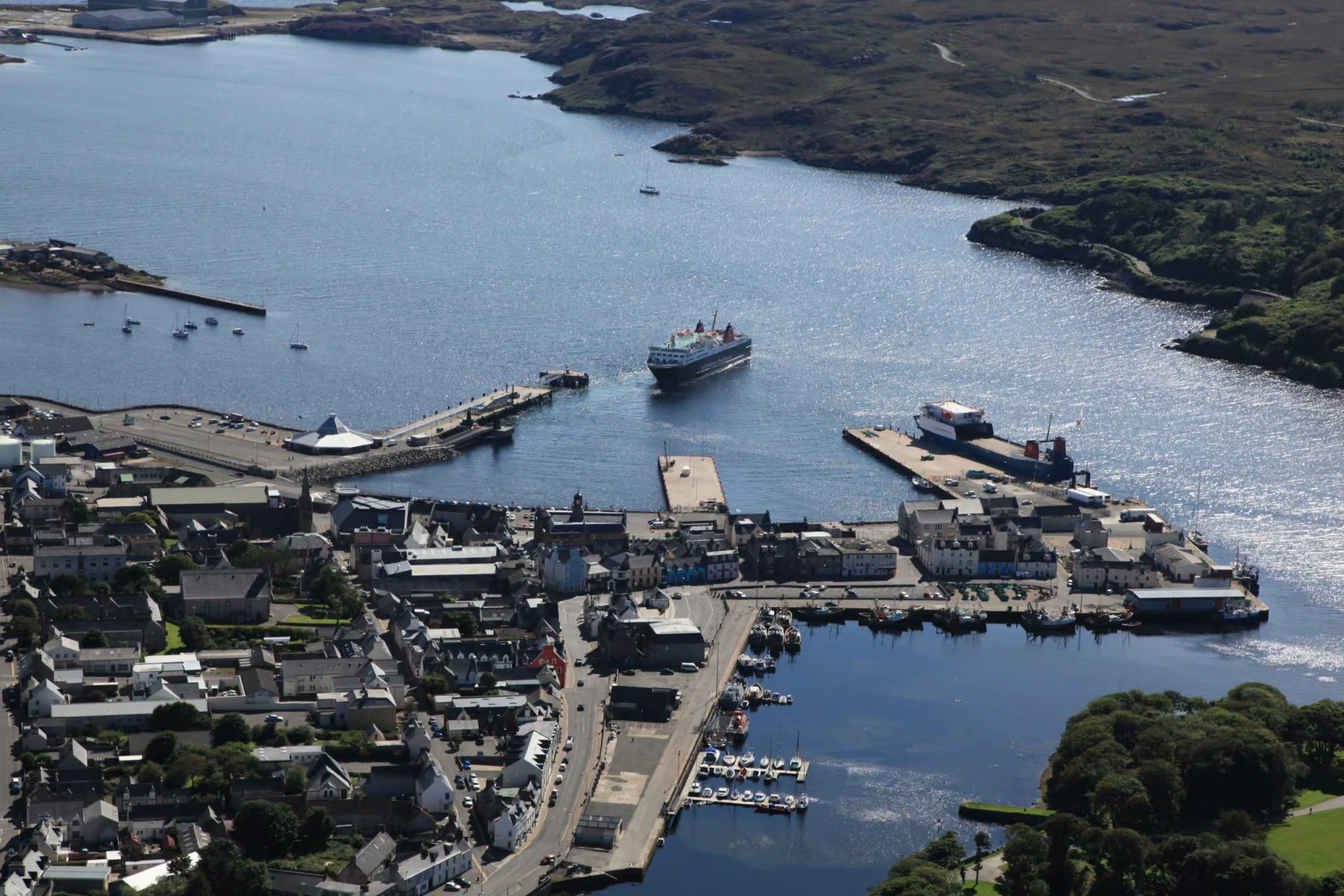
The Scottish government has committed GBP 1.8 million to advance Stornoway Port’s Deep Water South project, a strategic move to position the Isle of Lewis as a central hub for floating offshore wind operations in Scotland.
Market and Operational Impact
The funding, channelled through Highlands and Islands Enterprise, will finance ground investigations and design work for the new terminal. Deep Water South is the second phase of Stornoway Port’s deep water expansion, following the 2024 opening of its existing Deep Water Terminal. The current terminal already supports cruise liners, freight ferries, and offshore renewables vessels, but the new facility will focus exclusively on year round offshore wind activities.
The expansion is expected to accommodate floating offshore wind vessels and provide storage for large scale construction and operations. It will also facilitate the integration of wind turbine components onto floating foundations. Magnora Offshore Wind, developer of the Talisk floating wind project, has already pledged to use Stornoway Port for construction and operations, underscoring the port’s growing importance in the sector.
Stakeholder Reactions and Next Steps
Highlands and Islands Enterprise highlighted the project’s potential to unlock significant economic opportunities for the Outer Hebrides. The Scottish government’s investment reflects its broader commitment to renewable energy and regional development. Stornoway Port officials have emphasized the need for rapid progress to align with the ScotWind lease round timelines, where several floating wind projects are slated for development near the port.
Industry analysts note that the expansion could position Stornoway as a key player in Scotland’s offshore wind supply chain, attracting further private investment and creating jobs in a region traditionally reliant on fishing and tourism.
Wider Context and Industry Outlook
The investment aligns with Scotland’s ambitious targets to generate 11 GW of offshore wind capacity by 2030, with floating wind technology playing a pivotal role. Ports like Stornoway are critical to supporting the logistics and infrastructure needs of this emerging sector. The project also reflects a broader trend of regional ports adapting to serve renewable energy markets, a shift accelerated by climate goals and energy transition policies.
As floating wind projects gain momentum, the ability of ports to provide specialized infrastructure will determine their competitiveness. Stornoway’s expansion could serve as a model for other ports seeking to diversify into renewable energy logistics.
Source: Breakbulk News