


Six 158-Ton Giants on the Move: Inside deugro’s High-Stakes Multimodal Push for Abu Dhabi’s Wave C1 Project
Moving the immovable across three transport modes
In project logistics, scale changes everything. What looks manageable on paper quickly becomes complex when cargo pushes dimensional and weight limits. That reality was on full display during the recent delivery of six deaerator vessels for the Wave C1 Project in Abu Dhabi.
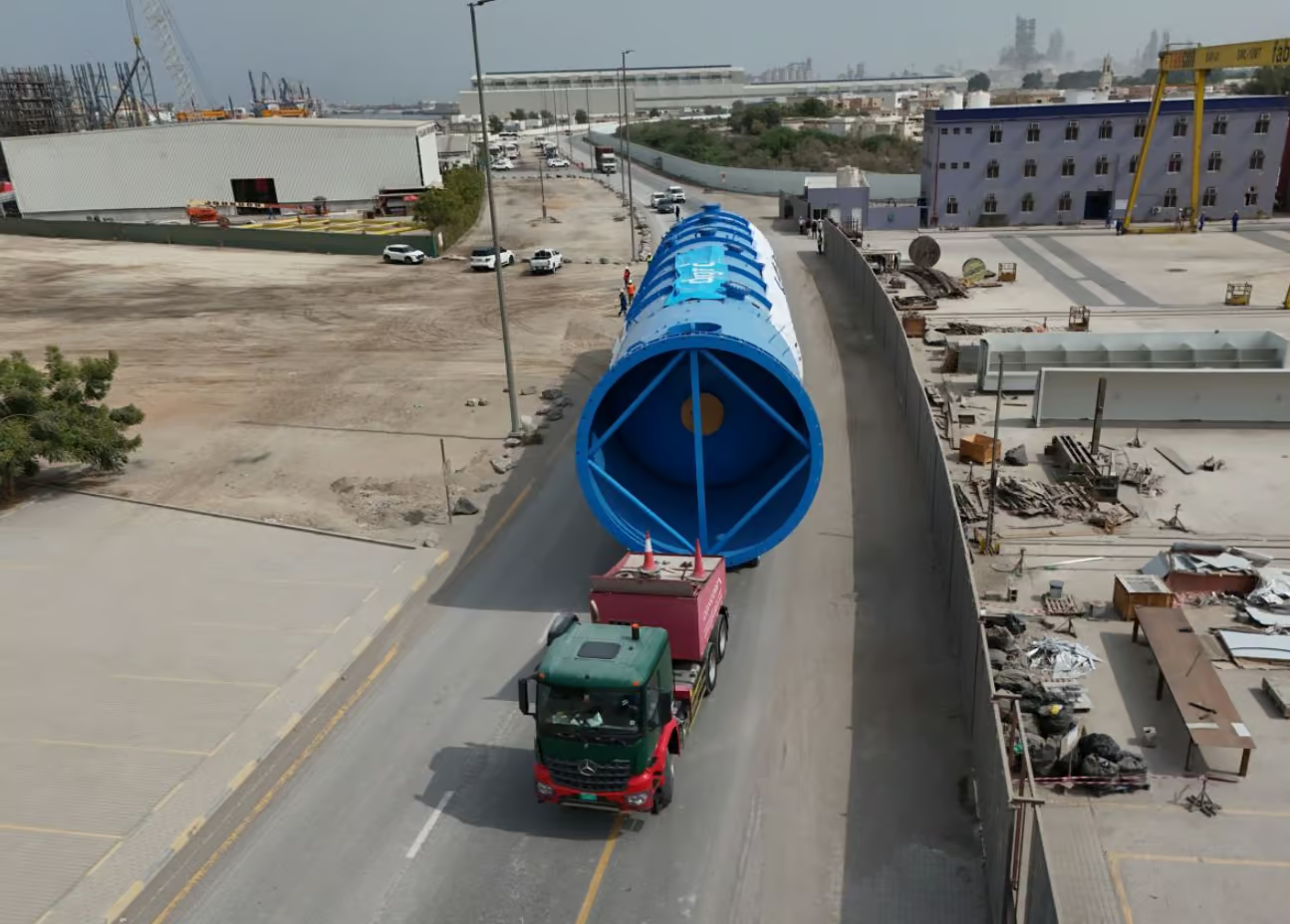
Each unit weighed 158 metric tons and measured 36.6 x 6.4 x 7.0 meters. Oversized by any standard, the vessels required tightly coordinated multimodal execution from Ras Al Khaimah to Mirfa.

Commissioned by Orascom Metito JV, deugro Abu Dhabi handled the end to end scope. The assignment covered collection from the supplier yard, road transfer to the RMC jetty, marine shipment to MBK ICAD, and final delivery to the project laydown area.
Precision planning down to the centimeter
When cargo reaches this scale, small miscalculations become major risks. According to Ilyas Abdulla, Head of Business Development and Sales at deugro Abu Dhabi, the transport demanded meticulous engineering and project management.
Because of the vessels’ size, weight, and sensitivity, every intersection, transfer point, and securing procedure had to be mapped in advance. Planning extended down to centimeter level tolerances.
At origin, gantry cranes loaded the units onto two 12 axle line conventional trailers arranged by deugro. Method statements and securing designs were prepared by dteq Transport Engineering Solutions, ensuring structural integrity during transit.
The initial road movement covered just 600 meters to the RMC jetty. Even this short stretch required traffic coordination, permits, and controlled speeds averaging 5 kilometers per hour.
Congestion, port pressure, and berthing constraints
Short distances do not always mean simple operations. The biggest hurdle emerged at the load out port.
Clerin Basil, Project Coordinator at deugro UAE, pointed to congestion at the small port and adjacent vendor yard as the key operational constraint. Aligning yard handling, berth access, and RO RO vessel readiness required synchronized timing.

Early engagement with port authorities proved essential. Securing berthing windows and validating cargo drafts helped prevent schedule slippage before the marine leg even began.
Pairs of vessels were rolled onto self propelled deck barges under direct supervision from deugro coordinators and dteq engineers. Continuous on site oversight ensured compliance with safety and securing procedures.
Engineering the sea voyage
Once loaded, the cargo began its 139 nautical mile journey to MBK ICAD, escorted by two tugboats.
Engineering oversight did not stop at the quayside. Harsh Jassal, Transport Engineer at dteq, highlighted the technical depth behind the marine planning.
Route surveys and turning simulations had already been completed during earlier phases. Vessel selection, jetty suitability, draft limitations, and tidal variables all shaped the execution model.
Mooring strategies, ballast calculations, and vessel stability assessments were engineered to maintain safe transport conditions throughout the voyage.
Cargo securing systems combined lashing chains to counter longitudinal movement and uplift forces, while structural stoppers prevented transverse sliding. All designs complied with international standards including DNV, IMO, and DIN EN frameworks.
Final delivery across 132 kilometers inland
On arrival at MBK ICAD, pre positioned teams from deugro and dteq received the cargo for final delivery.
The last leg involved 132 kilometers of road transport to Mirfa. As with the origin move, escort planning, route validation, and transport engineering governed execution.
The vessels were delivered to the designated laydown area in line with project schedule and budget parameters.
For Ahmed Osman, Country Representative Egypt within deugro’s Global Business Development Team, the move reinforced the company’s core identity in handling oversized and critical cargo through coordinated engineering and operational precision.
Source: Breakbulk News